Theory lessons
Code class in the room
Des cours en salle animés par un enseignant, sur les thèmes du programme officiel, et des stages de code à chaque vacances scolaires.
Thematic courses with a teacher
Every Wednesday and Saturday from 11am to 12pm, a different theme at each session.
- LDispositions légales
- CLe conducteur
- RLa route
- ULes autres usagers de la route
- DRéglementation générale
- APorter secours
- PPrécautions nécessaires en quittant le véhicule
- MÉléments mécaniques
- SÉquipements de sécurité
- EEnvironment
See the schedule of upcoming lessons (date and topic of each session).
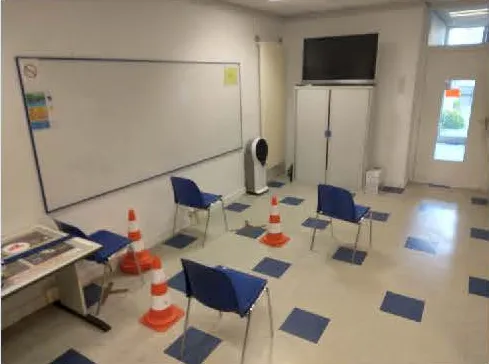
3 salles de code
A code session every half hour, as soon as the office opens.
Upcoming classroom lessons
Wednesdays and Saturdays, 11 am to 12 pm.
| Date | Topic |
|---|---|
| Stop and parking | |
| Crossing and overtaking | |
| Regulation of driving licence | |
| Eco-driving | |
| Other users, public space sharing | |
| Traffic rules | |
| Signalling | |
| Visibility and lighting | |
| Risk awareness |
| Date | Topic |
|---|---|
| Priorities | |
| First aid | |
| Stop and parking | |
| Crossing and overtaking | |
| Regulation of driving licence | |
| Eco-driving | |
| Other users, public space sharing |
| Date | Topic |
|---|---|
| Traffic rules | |
| Signalling | |
| Visibility and lighting | |
| Risk awareness | |
| Priorities | |
| First aid |
L’épreuve théorique générale (examen du code)
Pour se préparer à l’épreuve du code, il faut avoir au moins :
- 16 ans si vous suivez la formation traditionnelle
- 15 ans si vous suivez l’apprentissage anticipé de la conduite (AAC)
- Pour réussir l’épreuve, il faut obtenir au moins 35 bonnes réponses sur 40 questions (5 erreurs maximum).
- Il y a toujours au moins une proposition juste et au moins une proposition fausse.
- Il peut y avoir 2, 3 ou 4 propositions.
- Une réponse est considérée comme juste si toutes les propositions exactes ont été validées.
- Parmi les 40 questions, 4 sont en vidéo : un logo vous en informe juste avant. Une vidéo de quelques secondes se déroule puis s’arrête, et la question vous est posée sur l’arrêt sur image. Pendant la vidéo, pensez à évaluer l’intervalle de sécurité et à regarder tous les rétroviseurs.
Nota : Le jour de l’examen, pensez à apporter votre pièce d’identité et votre convocation.
Votre code est valable pendant 5 ans.
Avant l’examen
Avant d’envisager l’examen du code, nous vous proposons un bilan de vos statistiques afin d’optimiser votre réussite. Pour obtenir l’examen (valable 5 ans), il faut avoir 35 bonnes réponses sur 40.
Stages de code à chaque vacances scolaires
Une semaine intensive, du lundi au samedi, à chaque vacances scolaires : février, Pâques, été, Toussaint et Noël. Réservez dès maintenant votre place : prochaines dates sur simple appel.
Conduct of a road safety course
- 1
Reception and presentation
- Participants are welcomed by the teacher, who presents the course.
- Presentation of the objectives of the session, the importance of road safety and the topics covered.
- 2
Road safety theory
- Traffic rules: signs, priorities, speed limits and behaviour.
- Hazards and hazards: weather conditions, fatigue, alcohol and drugs.
- Safety equipment: seat belts, child seats, vehicle systems (ABS, airbags, etc.).
- 3
Situation
- Driving simulator to work on specific situations (emergency braking, driving in the rain...).
- 4
Case studies
- Analysis of actual accidents to understand errors and preventive measures.
- Questions and experience sharing for a better collective understanding.
- 5
Assessment and return
- Small test or quiz at the end of the session to check understanding.
- Personalized return of the teacher: strengths and improvements.
- 6
Closure
- Summary of key points and reminder of the importance of road safety.
- Educational materials to continue to review at home.
- Encouragement to apply good practices to become a responsible driver.
A road safety course in driving schools aims to provide future drivers with the knowledge and skills necessary to drive safely. Through a combination of theory, practice and interaction, students gain a thorough understanding of the dangers of the road and the preventive measures to be taken.